
How much does a horse weigh?
An average riding horse is somewhere around 1,100 lb (500 kg), but yours is not average, and every feed scoop, wormer syringe and drug dose on the yard is measured against its real number. Take a tape to it and this works the weight out — and, if you give it all four measurements, what it ought to weigh.
Why?
14 lb to the stone. A stone of a horse is not a stone of a person, but the arithmetic is.Why?
Its ideal weight at condition score 5, worked from height and body length only — the two measurements that do not change when a horse gets fat.Why?
Zero means it is at or below its ideal, and a note below says which.Why?
Worked back from the pounds, using the measured weight difference between one score and the next. It is a cross-check on your hands, not a replacement for them.Why?
Dry matter, at the standard 1.5–2.5% of body weight. This is the number the weight was worth knowing for.What the answer means
An average adult riding horse weighs somewhere around 1,100 lb, or 500 kg, or 79 stone. That figure is the one every feed chart in the world is written around, and it is almost certainly not your horse’s.
The 15 hh stock-type horse worked through this page measures 74″ round the girth, 66″ from shoulder to buttock, 60″ at the withers and 40″ round the neck. The equation fitted for that type of horse puts it at 1,178 lb (534 kg), give or take 49 lb — and that give-or-take is not padding. It is the root mean square error the researchers measured against a livestock scale when they published the equation, and printing it is the difference between a number and a number you can act on.
Why it matters more than it sounds: nearly everything else on a yard is a percentage of this figure. Hay is fed at 1.5–2.5% of body weight. Grain has a hard ceiling of half a percent of body weight in any one meal. Wormers and bute are dosed per hundred pounds. Be 15% out on the weight and you are 15% out on all of them, in the same direction, every day.
How much does a horse weigh in pounds, kilograms and stone?
The same horse, in every unit the question gets asked in. Note the fourth column: 1,100 lb is a bit over half a short ton, so a riding horse does not weigh a short ton and a heavy draft horse does.
| Pounds | Kilograms | Stone | Short tons | Tonnes | Grams |
|---|---|---|---|---|---|
| 500 lb | 227 kg | 35.7 | 0.25 | 0.23 | 226,796 g |
| 700 lb | 318 kg | 50.0 | 0.35 | 0.32 | 317,515 g |
| 900 lb | 408 kg | 64.3 | 0.45 | 0.41 | 408,233 g |
| 1,000 lb | 454 kg | 71.4 | 0.50 | 0.45 | 453,592 g |
| 1,100 lb | 499 kg | 78.6 | 0.55 | 0.50 | 498,952 g |
| 1,200 lb | 544 kg | 85.7 | 0.60 | 0.54 | 544,311 g |
| 1,400 lb | 635 kg | 100.0 | 0.70 | 0.64 | 635,029 g |
| 1,600 lb | 726 kg | 114.3 | 0.80 | 0.73 | 725,748 g |
| 1,800 lb | 816 kg | 128.6 | 0.90 | 0.82 | 816,466 g |
| 2,000 lb | 907 kg | 142.9 | 1.00 | 0.91 | 907,185 g |
Three of those columns are worth a sentence each. How much does a horse weigh in stone? A stone is 14 lb, so an 1,100 lb horse is 78.6 stone — the unit riders in Britain and Ireland use and almost nobody else does. How much does a horse weigh in grams? 498,952 g for that same horse, a figure nobody on a yard has any use for and a school exercise asks for constantly. How much does a horse weigh in tons? That depends on whose: a short ton is 2,000 lb, a long ton 2,240 lb and a metric tonne 2,205 lb, a spread of 12% on one word. On this site we always write which one we mean.
The formula, spelled out
If you can only get a tape round the girth and along the body, this is the formula, and it has been in print since 1988:
weight in pounds = (heart girth × heart girth × body length) ÷ 330, with both measurements in inches.
For our horse: 74 × 74 × 66 = 361,416, divided by 330 is 1,095 lb (497 kg). In centimetres and kilograms it is the identical equation with a divisor of 11,877 — the 330 is just that number rewritten for inches and pounds.
The four-measurement version is a different shape. Each measurement is raised to its own power and the divisor changes with the type of horse:
weight in pounds = (girth1.486 × length0.554 × height0.599 × neck0.173) ÷ 114 for a stock horse; the divisor is 119 for Arabians and ponies. Draft horses and warmbloods use a second set of exponents and divide by 1,181 and 1,209.
The exponents are what make it better. Girth carries the most weight in the answer, as it should, but not as the plain square the old formula assumes — and neck circumference, which the old formula ignores completely, is where a fat horse hides. On our example horse, one extra inch of girth adds 24 lb and one extra inch of neck adds 5 lb.
| Method | What it needs | Answer | Published error |
|---|---|---|---|
| Four measurements | Girth, length, height, neck | 1,178 lb (534 kg) | 49 lb either way |
| Girth and length | Girth and length only | 1,095 lb (497 kg) | 10% |
| Weight tape | A tape reading | 1,355 lb (614 kg) | reads 5.000000000000004–25% light |
The four-measurement figure sits about 8% above the two-measurement one here, and that is the usual direction: the older formula tends to read light on a well-covered horse. Which route to take depends less on accuracy than on what you can get a tape around — with one exception. On Thoroughbreds, an independent 299-horse comparison in Poland found the two-measurement formula the most accurate of the seven it tested, beating the four-measurement equations. If your horse is a Thoroughbred, use girth and length.
Where each measurement comes from
Heart girth. All the way around the horse, over the highest part of the withers. In the research equations this is the girth at the third thoracic vertebra.
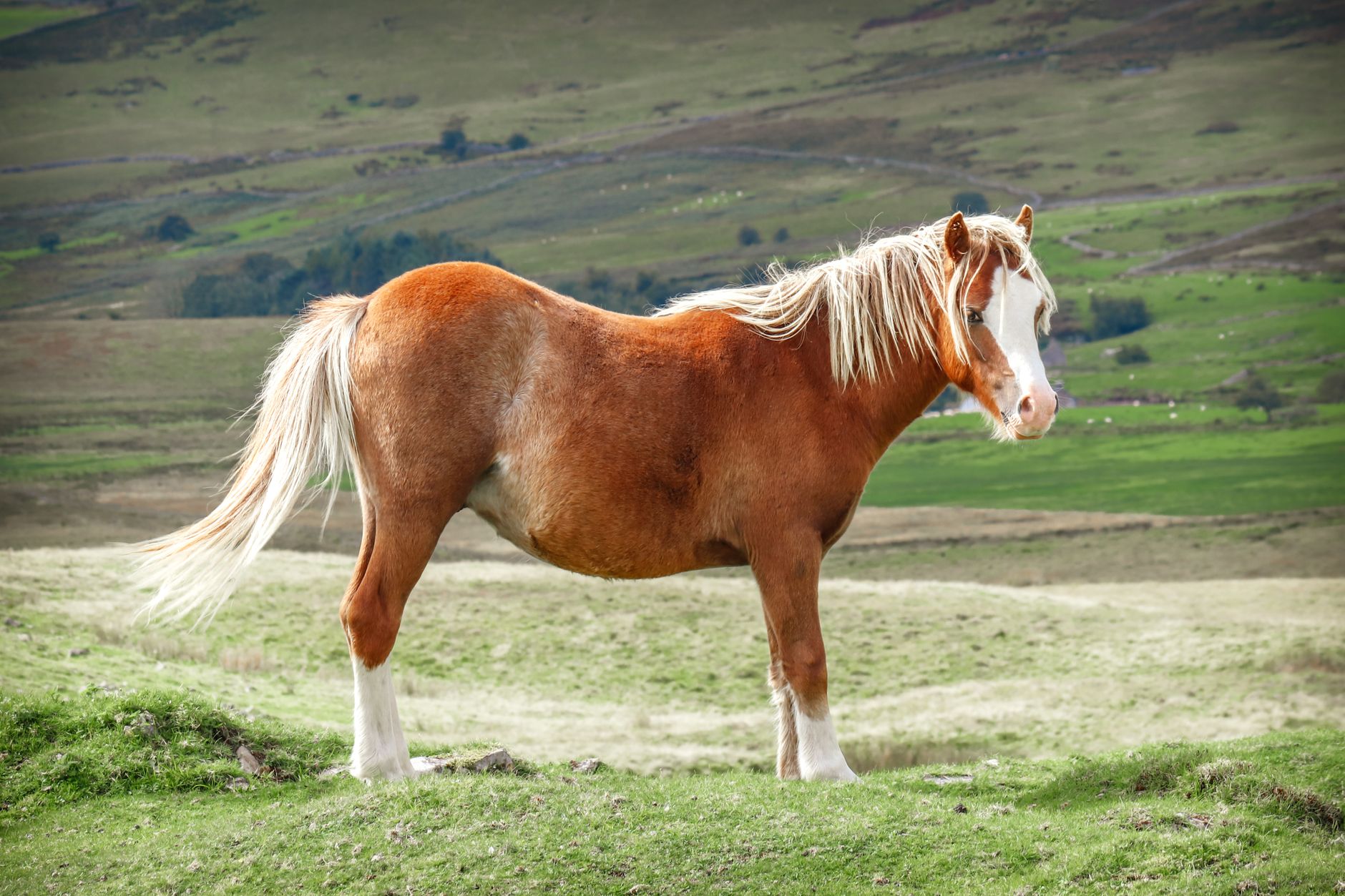
Body length. Point of shoulder straight back along the side to the point of the buttock, taking the tape around the corner of the hip – about half the distance from the corner to the tail. This is the measurement people most often get wrong, usually by running the tape nose to tail.
Height. At the withers, measured at the third thoracic vertebra. On draft horses the studies subtracted shoe height, so measure the horse and not its shoes.
Neck. Circumference midway between the poll and the withers.
Horse standing square, someone holding it rather than tied. Plastic tape rather than cloth; never a metal tape, which can cut. Measure at the same time of day each time, ideally in the morning before feeding. Two people can hold a tape more squarely than one, and a third makes the body length far easier.
How accurate is a weight tape?
Less accurate than people assume, and wrong in a consistent direction. Ohio State puts it plainly: a weight tape “usually gives an estimate that is lighter than the actual weight as measured by a scale.” The research comparing methods puts tapes and the older equations 5% to 25% off scale weight, against about 4% for the four-measurement equations.
So if your tape says 1,178 lb, the horse probably weighs somewhere between 1,237 and 1,472 lb. On a wormer dose that is the difference between one syringe and two.
None of which makes a tape useless. It is excellent at what it is really for, which is tracking change: read it at the same spot on the same day of the month and a 20 lb move is real information even though the absolute number is not. Keep the tape for the trend and take four measurements twice a year for the number.
What your horse should weigh
The same research fitted a second equation, on horses scored at condition 5 out of 9, using only wither height and body length — the two measurements that do not change when a horse puts on fat. It answers a different question: not what the horse weighs, but what it would weigh at a healthy condition.
For our example horse that is 1,170 lb (531 kg) against a measured 1,178 lb (534 kg). The gap between the two, divided by the measured weight difference between one condition score and the next — 37 lb for a stock horse, 22 for a pony, 86 for a draft — turns pounds back into the unit vets and nutritionists actually talk in.
| Height | Length = height | Length = height + 4″ | Length = height + 8″ |
|---|---|---|---|
| 12 hh (48″) | 608 | 670 | 732 |
| 13 hh (52″) | 764 | 827 | 889 |
| 14 hh (56″) | 921 | 983 | 1,045 |
| 14.2 hh (58″) | 999 | 1,061 | 1,123 |
| 15 hh (60″) | 1,077 | 1,139 | 1,202 |
| 15.2 hh (62″) | 1,155 | 1,218 | 1,280 |
| 16 hh (64″) | 1,233 | 1,296 | 1,358 |
| 16.2 hh (66″) | 1,312 | 1,374 | 1,436 |
| 17 hh (68″) | 1,390 | 1,452 | 1,514 |
| 18 hh (72″) | 1,546 | 1,609 | 1,671 |
Read that table across, not down. Height on its own is a poor predictor of weight, which is why the columns move so much: a 15 hh horse with a body length equal to its height should weigh 1,077 lb, and the same height with eight inches more length should weigh 1,202 lb. That is 12% between two horses that measure the same at the withers.
| Height | Stock | Arabian | Pony | Warmblood | Draft |
|---|---|---|---|---|---|
| 12 hh (48″) | 670 | 595 | 606 | 445 | — |
| 13 hh (52″) | 827 | 752 | 763 | 659 | — |
| 14 hh (56″) | 983 | 908 | 919 | 873 | — |
| 14.2 hh (58″) | 1,061 | 986 | 997 | 980 | — |
| 15 hh (60″) | 1,139 | 1,064 | — | 1,087 | 1,230 |
| 15.2 hh (62″) | 1,218 | 1,143 | — | 1,194 | 1,337 |
| 16 hh (64″) | 1,296 | 1,221 | — | 1,301 | 1,444 |
| 16.2 hh (66″) | 1,374 | 1,299 | — | 1,408 | 1,551 |
| 17 hh (68″) | 1,452 | 1,377 | — | 1,515 | 1,658 |
| 18 hh (72″) | 1,609 | 1,534 | — | 1,729 | 1,872 |
Type matters less than most breed charts suggest — the height and length coefficients are the same for stock, Arabian and pony types, and only the constant changes. What changes a great deal is the draft and warmblood equation, which was fitted separately on 227 horses and weights body length more heavily.
What changes the answer
Condition. A condition score is worth 37 lb on a stock horse and 86 lb on a draft. A horse two scores over ideal is carrying 74 lb it does not need, which is the entire reason for weighing it in the first place.
Time of day and gut fill. Measure in the morning before feeding, and always at the same time. A horse that has just drunk and eaten measures bigger than the same horse four hours later, and the difference is water, not weight you need to worry about.
Pregnancy. Arkansas extension’s caveat is worth quoting exactly: the two-measurement formula “may not be highly accurate for pregnant mares or for horse with extreme conformational irregularities.” The same applies to the four-measurement equations, which excluded pregnant mares from the study population entirely.
Age. None of these equations is for a young horse. Weight tapes only become reliable at about 18 months, and the formulae were fitted on horses of three years and older. For anything younger, the growth table below is the honest tool.
How much does a horse weigh at birth, and after?
A newborn foal is about 10% of the weight it will finish at, and about 60% of the height. That mismatch is why foals look like legs with a horse attached: nearly all the height arrives first and the weight fills in behind it for four years.
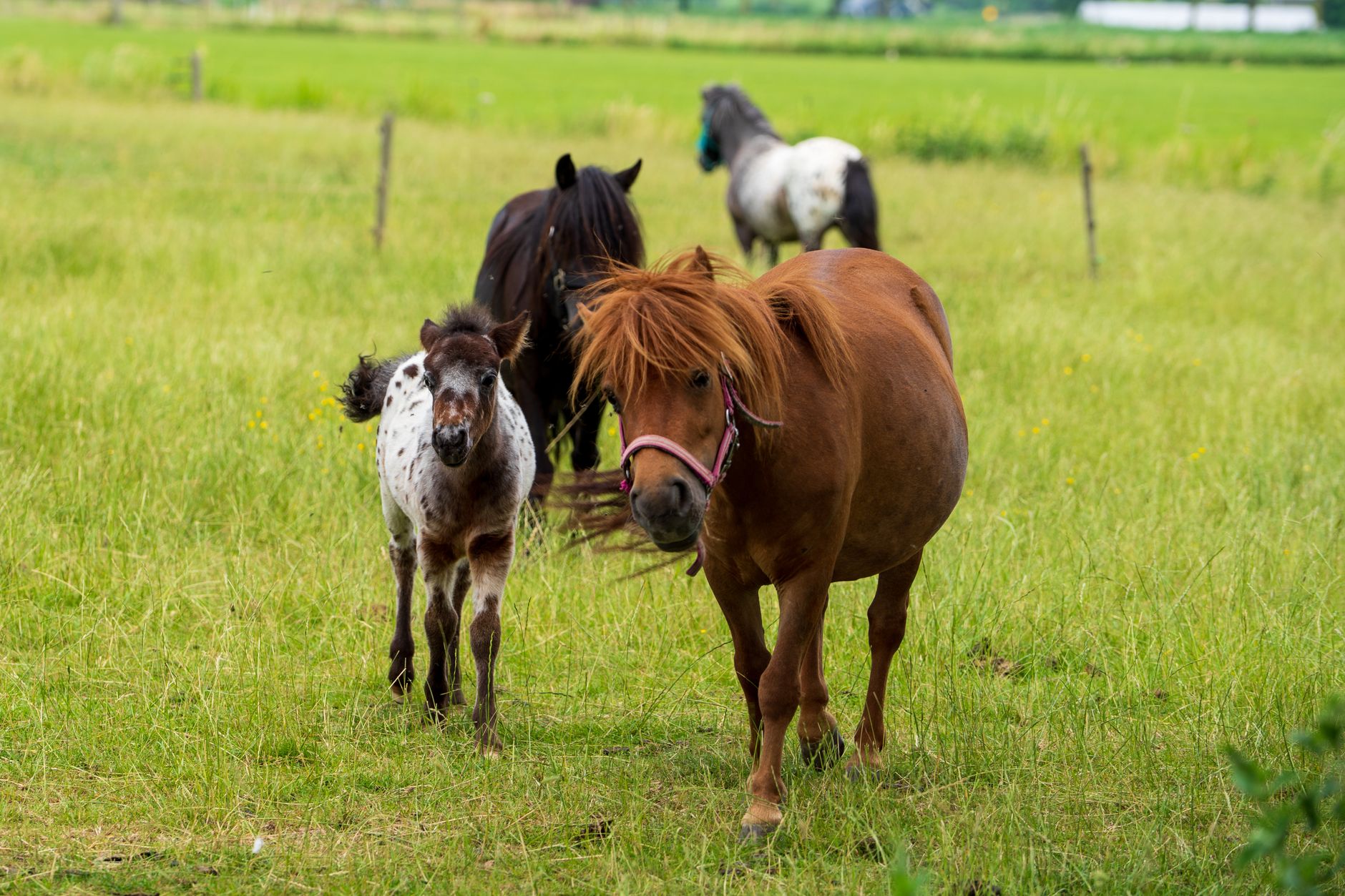
| Age | % of mature | 900 lb mature | 1,100 lb mature | 1,300 lb mature | 1,800 lb mature |
|---|---|---|---|---|---|
| Birth | 9% | 81 | 99 | 117 | 162 |
| 4 months | 36% | 324 | 396 | 468 | 648 |
| 6 months | 46% | 414 | 506 | 598 | 828 |
| 8 months | 54% | 486 | 594 | 702 | 972 |
| 10 months | 61% | 549 | 671 | 793 | 1,098 |
| 12 months | 67% | 603 | 737 | 871 | 1,206 |
| 14 months | 71% | 639 | 781 | 923 | 1,278 |
| 16 months | 76% | 684 | 836 | 988 | 1,368 |
| 18 months | 79% | 711 | 869 | 1,027 | 1,422 |
| 24 months | 90% | 810 | 990 | 1,170 | 1,620 |
| 36 months | 97% | 873 | 1,067 | 1,261 | 1,746 |
| 48 months | 99% | 891 | 1,089 | 1,287 | 1,782 |
The percentages barely change with the size the horse will mature at, which is what makes the table usable — the same figure works for a pony and for a draft horse. What it needs from you is a guess at the mature weight, and that is a genuine guess based on the sire, the dam and the breed rather than anything measurable. Two useful anchors: half the adult weight by six months, and 67% of it by the first birthday.
Common questions about horse weight
How do I calculate my horse’s weight?
Two measurements will do it: heart girth and body length, both in inches, into girth × girth × length ÷ 330. For the 15 hh horse worked through above that comes to 1,095 lb (497 kg). Adding wither height and neck circumference and using the equation fitted for the horse’s type is better still — it gives 1,178 lb (534 kg) for the same animal, and it is the only route that also tells you what the horse ought to weigh.
What is the formula for calculating horse weight?
In pounds and inches: weight = (heart girth × heart girth × body length) ÷ 330. In kilograms and centimetres the same equation divides by 11,877, which is where the 330 comes from — they are one formula, published by Carroll and Huntington in 1988, printed in two unit systems. The four-measurement equations are different in shape: each measurement carries its own exponent, and the divisor changes with the type of horse.
How heavy is a 14.2 hand horse?
14.2 hh is 58 inches at the withers, and height alone will not tell you — a 14.2 hh Welsh cob and a 14.2 hh Arabian are not the same animal. What height and body length together will tell you is what it ought to weigh: about 1,061 lb (481 kg) for a stock type at condition score 5, and 997 lb (452 kg) for a pony type of the same size. To find out what it actually weighs, take a tape to its girth.
How heavy is a 16 hand horse?
16 hh is 64 inches. At a body length of 68 inches the published ideal weight is about 1,296 lb (588 kg) for a stock type and 1,301 lb (590 kg) for a warmblood. Real 16 hh horses come in anywhere from about 1,000 to 1,400 lb depending on build and condition, which is precisely why measuring beats looking it up.
How heavy is a fully grown horse?
Most adult riding horses fall between 900 and 1,300 lb (408–590 kg), with 1,100 lb (499 kg) the figure feeding tables are written around. Ponies run from about 400 to 900 lb, and draft horses from 1,600 to over 2,200 lb. A horse reaches 90% of its mature weight by two years old and is not quite finished at four.
Can a horse weigh 1000 pounds?
Easily — 1,000 lb (454 kg) is an ordinary weight for a light riding horse, an Arabian or a small Quarter Horse. It sits just below the 1,100 lb average that feed charts assume, which matters more than it sounds: a horse 9% lighter than the chart should be eating about 9% less of everything the chart tells you to give it.
Can a horse weigh 1 ton?
A short ton is 2,000 lb (907 kg), and heavy draft horses reach it — Shires, Percherons and Belgians at the top of their range. No riding horse does. Watch which unit is meant, because there are three: a short ton is 2,000 lb, a long ton 2,240 lb and a metric tonne 2,205 lb, a spread of 12% on one word.
What’s heavier, a horse or a cow?
Usually the cow, but the ranges overlap almost completely. An average riding horse is around 1,100 lb; a mature beef cow runs 1,200 to 1,600 lb and a dairy cow more. A draft horse at 2,000 lb outweighs nearly any cow. The reason the horse looks heavier is height, and height is the measurement that tells you least about weight.
Where to weigh tape a horse?
All the way around the horse, over the highest part of the withers. In the research equations this is the girth at the third thoracic vertebra. Stand the horse square on level ground, have someone hold it rather than tie it, and read the tape where the tape’s own instructions say. Then use the same spot every time — a tape is far better at measuring change than it is at measuring weight.
How do I tell how much my horse weighs?
In order of accuracy: a livestock scale, then the four-measurement equation for its type, then girth and length through the 330 formula, then a weight tape, then guessing. That order is not a matter of opinion — in the study behind these equations, owners guessing their own horses were 8% to 15% out, and on draft horses and warmbloods their owners were 115 lb off on average.
How much does a 1200 lb horse eat per day?
18 to 30 lb of dry matter a day, which is 1.5% to 2.5% of its body weight and covers hay and grass together. Our hay calculator works that into bales and flakes, and the grain calculator decides whether anything else is needed on top.
How heavy is a 2 year old horse?
About 90% of what it will weigh as an adult — so 990 lb for a horse that will mature at 1,100 lb. The percentage barely changes with size, which is the useful part: it holds for a pony and for a draft horse. At one year it is 67%, at eighteen months 79%, and it is still creeping up at four.
How much does a horse weigh at birth?
About 10% of what it will weigh as an adult — near enough 110 lb (50 kg) for a foal out of an average riding horse, and 180 lb (82 kg) for a draft foal. A newborn foal is already 40% short of its adult height rather than its adult weight: it arrives at 60% of the height it will finish at, and only 10% of the weight.
How much should my horse weigh?
That is a different question from what it does weigh, and it has its own equation. Fitted only on horses scored at condition 5, it uses wither height and body length — the two measurements that do not change when a horse gets fat. For the 15 hh stock horse above it returns 1,170 lb (531 kg) against a measured 1,178 lb (534 kg). Give the calculator all four measurements and it prints both.
Read next
- How much does a horse weigh in stone? — the same weights in the unit British and Irish riders use, and why searching it returns racing pages.
- How much does a horse weigh at birth? — the growth curve from foal to adult, and why none of the methods above work on a young horse.
- How much hay does a horse need per day? — the first thing this number is for: 1.5–2.5% of it, in bales and flakes.
- How much grain should I feed my horse daily? — whether the hay leaves a gap worth filling, and the half-a-percent per meal ceiling.
- How many acres does a horse need? — grazing pressure is set by total live weight, not by head count.
- All horse calculators — the rest of the tools in this section.
Where these figures come from
Every coefficient behind this calculator is published and cited, and where two published sources disagree we say so rather than quietly pick one. On this page there is one such disagreement worth naming: the extension write-up of the ideal-weight equation transposes its two coefficients against the peer-reviewed papers it summarises. We follow the papers, and the arithmetic that settles it is in our how we source our numbers.
- A Comparison of Weight Estimation Methods in Adult Horses — Journal of Equine Veterinary Science 31(12):706-710 (2011)
- Body condition scoring and weight estimation of horses — Equine Veterinary Journal 20(1):41-45 (1988)
- Bodyweight Estimations for Adult Horses — Stable Management (2016)
- Caring for Horses in Cold Weather — Utah State University Extension
- Estimating a Horse’s Body Weight — University of Arkansas Division of Agriculture, Cooperative Extension Service
- Estimating Body Weight of Growing Foals — Star Milling Co. (Dr. Bray’s Corner)
- Estimation of Actual and Ideal Bodyweight Using Morphometric Measurements and Owner Guessed Bodyweight of Adult Draft and Warmblood Horses — Journal of Equine Veterinary Science 39:1-6 (2016)
- Estimation of Actual and Ideal Bodyweight Using Morphometric Measurements of Miniature, Saddle-Type, and Thoroughbred Horses — Journal of Equine Veterinary Science (2019)
- Estimation of body weight and development of a body weight score for adult equids using morphometric measurements — Journal of Animal Science 92(5):2230-2238 (2014)
- Evaluating Body Composition of Horses (AS-1024) — Ohio State University Extension (Ohioline) (2022)
- Evaluation of the Accuracy of Horse Body Weight Estimation Methods — Animals 10(10):1750 (2020)
- Foal Growth and Development — Merck Animal Health USA, Equine Health Library
- Nutritional Requirements of Horses and Other Equids — Merck Veterinary Manual
- The Horse (2nd edition) — W.H. Freeman and Company, New York (1990)
- Winter Feeding for Horses, Fact Sheet #1143 — Rutgers University, Department of Animal Sciences (2011)